Discover how to find second-hand shops and thrift stores near you. Explore affordable clothing, furniture, electronics and pre-loved products while enjoying smarter local shopping.
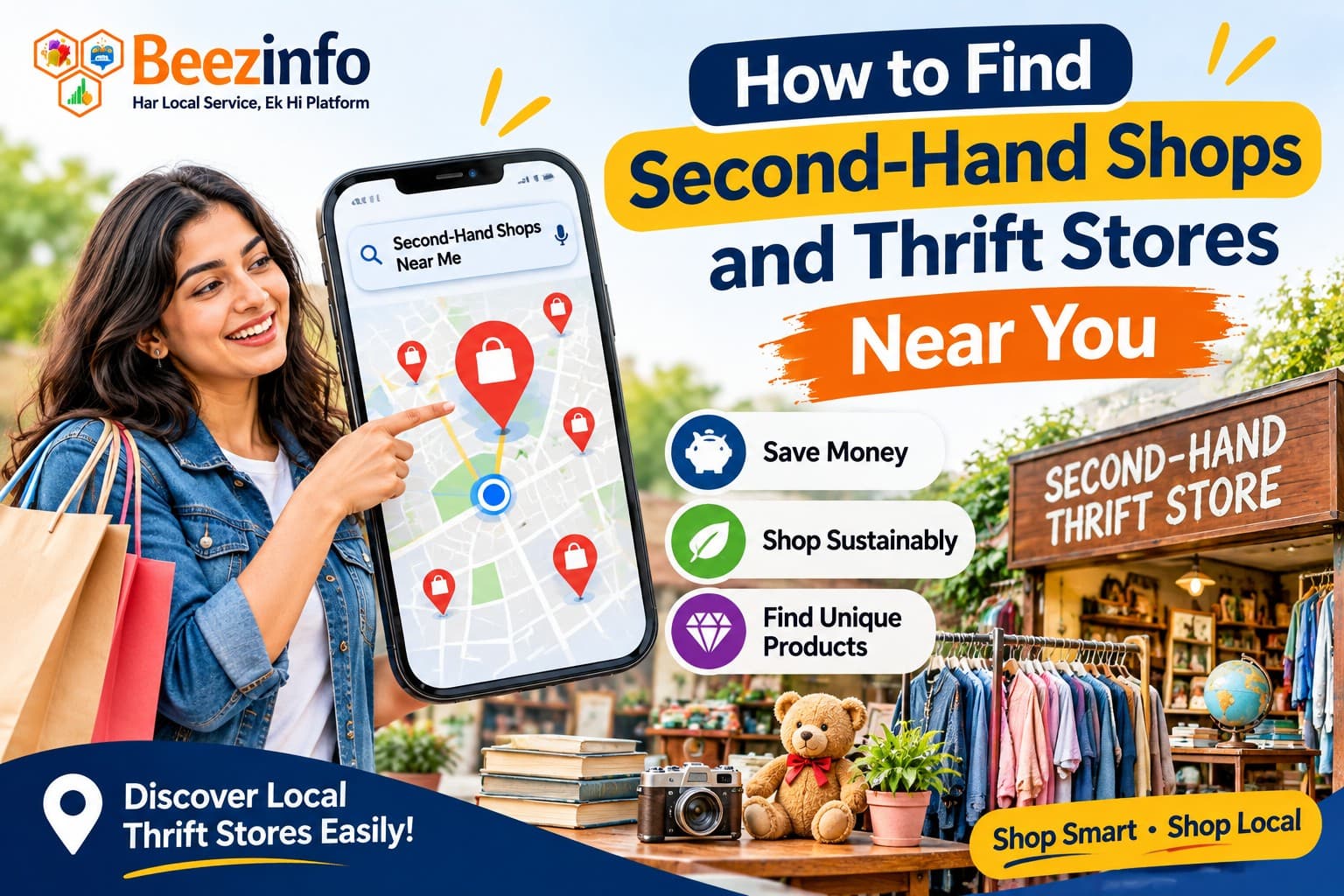
Seeking cost-effective purchasing avenues that do not sacrifice quality? The surge in popularity of second-hand boutiques and thrift stores reflects a growing consumer preference for fiscal prudence, the discovery of distinctive merchandise, and the cultivation of more discerning shopping habits.
Second-hand retailers provide a diverse array of offerings, ranging from pre-owned apparel and vintage accessories to utilized furniture, electronic devices, literary works, and domestic necessities, all available at economically advantageous rates.
Whether your objective is to locate second-hand retailers in your vicinity, discover thrift stores within your city, or identify affordable outlets for pre-owned furnishings, securing the appropriate local establishment can significantly streamline your shopping journey and enhance its overall convenience.
This guide delineates the process of identifying trustworthy second-hand retailers and thrift establishments in your vicinity, outlines the critical criteria for evaluating potential purchases, and provides strategies for maximizing the value of local shopping opportunities.
What Are Second-Hand Shops and Thrift Stores?
Second-hand retail establishments specialize in the sale of pre-owned merchandise, typically offering these items at prices significantly below their new counterparts.
The inventory at such venues is diverse, encompassing a wide array of categories including apparel, furnishings, electronic devices, literature, personal accessories, and domestic goods.
Thrift stores are primarily dedicated to offering accessible, pre-owned merchandise, encompassing a diverse range of goods sourced through donations, resale, or meticulous selection.
Both alternatives enable consumers to identify valuable items while simultaneously curbing superfluous expenditure.
Some Popular Categories Include:
- Second-Hand Clothing Retailers: A diverse array of pre-owned garments, including shirts, denim jeans, dresses, and jackets, alongside various other fashion accessories.
- Used Furniture Shops: Sofas, tables, chairs, wardrobes and home furniture.
- Second-Hand Electronics Retailers: Pre-owned smartphones, laptops, computers, and a diverse array of other electronic devices.
- Bookstores: Second-hand textbooks, novels, competitive exam books and educational materials.
- Vintage and Thrift Shops: Unique fashion pieces, accessories, collectibles and vintage products.
- Household Retailers: Domestic necessities, including kitchen staples, interior design accents, and routine consumer goods.
Why Are More People Choosing Thrift Stores?
Second-hand shopping has transcended its original association with fiscal prudence to emerge as a pragmatic purchasing strategy embraced by a diverse demographic, including students, working professionals, families, and individuals who relish the pursuit of distinctive goods.
Several pivotal factors underpin its rapidly escalating popularity.
1. Save Money on Everyday Purchases
A paramount benefit of second-hand shopping lies in its cost-effectiveness, as numerous pre-owned items are offered at prices significantly below those of their brand-new counterparts.
One may delve into a curated selection of budget-conscious apparel, furnishings, literature, and other necessities without compromising fiscal restraint.
2. Discover Unique and Vintage Products
Thrift stores frequently stock items that are scarce in conventional retail outlets.
Whether seeking vintage apparel or distinctive home décor, each visit holds the potential to uncover a remarkable treasure.
3. Support Sustainable Shopping
Acquiring pre-owned items serves to prolong their functional lifespan and mitigate the generation of superfluous waste, while simultaneously fostering a cultural shift toward reusing existing goods rather than procuring new ones on a recurring basis.
4. Find Affordable Furniture and Electronics
Whether establishing a new household, launching a small enterprise, or seeking cost-effective electronics, second-hand retailers present practical alternatives.
Nevertheless, it is imperative to meticulously assess the product's condition, operational functionality, and warranty terms prior to completing any purchase.
How to Find Second-Hand Shops and Thrift Stores Near You
Locating an appropriate local retailer need not prove a formidable challenge; instead, consider these pragmatic strategies to identify second-hand shops and thrift stores within your vicinity.
1. Search Online Using Location-Based Keywords
Start with simple Google searches such as:
- Second-hand shops near me
- Thrift stores near me
- Used furniture shops near me
- Second-hand clothing stores near me
- Used electronics shops near me
- Affordable thrift shops in [Your City]
- Second-hand bookshops near me
Incorporating your city or locality into your search query enhances the likelihood of uncovering pertinent commercial establishments in your immediate vicinity.
2. Explore Google Maps and Local Business Listings
Additionally, Google Maps serves as a highly effective tool for locating second-hand shops within your immediate vicinity.
Prior to making an on-site visit, it is prudent to conduct a comprehensive assessment by identifying pertinent business classifications, verifying the store's geographical location, scrutinizing customer feedback, and examining available visual documentation.
Business directories serve as a valuable resource for identifying local retailers, delineating their specific services, and retrieving essential contact details.
3. Discover Local Businesses on BeezInfo
Navigating the landscape of dependable local commerce is significantly streamlined by leveraging digital platforms that effectively bridge the gap between consumers and proximate service providers and retail establishments.
BeezInfo operates as a complimentary business discovery platform, enabling users to investigate and access a wide array of local enterprises and professional services.
BeezInfo empowers users to identify enterprises within their municipality, delve into comprehensive business profiles, and establish direct connections with regional service providers.
Whether your objective is to locate a proximate retail establishment, engage a regional service provider, or identify an enterprise within a specific sector, investigating local business directories serves as an effective mechanism for uncovering pertinent alternatives.
As the proprietor of a second-hand shop, thrift store, or resale enterprise, you may establish a complimentary business profile on BeezInfo to enhance your digital visibility and facilitate discovery by prospective clients.
4. Check Social Media and Local Communities
Numerous second-hand retailers and thrift vendors leverage platforms such as Instagram, Facebook, and local community networks to market their inventory.
Employ a search strategy that incorporates relevant hashtags and location-specific terminology such as:
- #ThriftShopping
- #SecondHandShopping
- #ThriftStoreIndia
- #PreLovedFashion
- #ThriftFinds
- #VintageShopping
Participation in local buying and selling groups offers a valuable avenue for identifying nearby vendors and accessing readily available products.
5. Ask for Local Recommendations
Often, the most exceptional second-hand stores are revealed through personal recommendation.
Consult your social circle, including friends, neighbors, colleagues, and members of the local community, to identify reputable thrift stores and resale shops within your vicinity.
Personal endorsements serve as an invaluable conduit for uncovering smaller enterprises that often lack a robust digital footprint.
What Should You Check Before Buying From a Second-Hand Shop?
Locating a thrift store in close proximity constitutes merely the initial phase of the process; prior to committing to any acquisition, one must deliberate upon several critical considerations.
1. Check Product Quality
Conduct a meticulous inspection of the product upon receipt to identify any defects, including surface scratches, discolorations, fractured components, absent accessories, or other conspicuous signs of damage.
2. Compare Prices
One must not presume that second-hand goods are invariably less expensive; it is essential to evaluate their cost against comparable new and pre-owned items prior to finalizing any purchase decision.
3. Ask About Return and Exchange Policies
Certain second-hand retailers operate under policies that strictly prohibit returns or exchanges; therefore, it is imperative to scrutinize the store's specific guidelines prior to finalizing any transaction.
4. Verify Electronics and Appliances
When evaluating pre-owned electronic devices, it is essential to rigorously assess the battery's health, charging capabilities, display integrity, connectivity protocols, and general operational functionality.
Whenever feasible, inquire about existing invoices, warranty coverage, and the vehicle's service record.
5. Choose Trusted Sellers
Examine customer reviews, verify store credentials, and scrutinize seller profiles; for high-value transactions, ensure the procurement of an official invoice or documented proof of exchange.
Popular Second-Hand Products Worth Exploring
For those newly embarking on the journey of thrift shopping, exploring these specific categories offers an ideal entry point.
Popular Second-Hand Product Categories
| Product CategoryWhat You Can Find | |
| Clothing | Jeans, shirts, jackets and dresses |
| Furniture | Sofas, tables, chairs and wardrobes |
| Electronics | Smartphones, laptops and computers |
| Books | Novels, textbooks and exam preparation books |
| Accessories | Bags, watches and fashion accessories |
| Home Décor | Lamps, decorative items and household essentials |
The selection and state of merchandise may differ across individual retail locations.
Tips for Finding the Best Thrift Stores in Your City
Seek to enhance the value derived from your second-hand shopping endeavors? Adhere to these straightforward recommendations:
Practical Tips for Better Thrift Shopping
- Conduct a targeted search by incorporating precise product identifiers alongside relevant geographical keywords.
- Rather than confining your inquiry to a single locale, consider broadening your scope by investigating a variety of distinct neighbourhoods.
- Conduct a comparative analysis of pricing across various retail establishments.
- Verify consumer testimonials and examine store imagery.
- Inquire with vendors regarding the current state and provenance of the merchandise.
- Frequent visits to retail outlets are advisable, as inventory is often replenished on a regular basis.
- Establish a spending budget prior to engaging in retail activities to effectively mitigate the impulse for superfluous acquisitions.
Why Local Business Directories Matter for Second-Hand Shops
A multitude of small-scale second-hand shops and thrift stores rely heavily on foot traffic from local clientele; yet, prospective patrons often face considerable difficulty locating these establishments through digital channels.
This obstacle stems largely from the fact that such enterprises frequently lack dedicated web presences or possess insufficient online visibility, thereby obscuring their physical locations from a broader audience.
Digital business directories effectively narrow this divide by significantly enhancing the accessibility of commercial data for discovery.
Benefits of Online Business Listings for Shop Owners
A well-maintained business profile can help shop owners:
- Enhance local online presence and visibility.
- Effectively connect with consumers actively seeking local retail establishments.
- Disseminate relevant business contact details.
- Present an array of products and services.
- Cultivate awareness within the local customer base.
- Cultivate a pipeline of prospective clients by leveraging digital discovery channels.
For proprietors of small enterprises, securing inclusion in pertinent online directories represents a strategic maneuver for cultivating a more robust digital footprint.
Final Thoughts
Leveraging the appropriate search methodologies significantly streamlines the process of locating second-hand shops and thrift stores in your vicinity.
By utilizing a diverse array of digital resources—including Google Maps, social media channels, and local business directories—you can efficiently uncover cost-effective shopping opportunities within your neighbourhood.
Whether seeking secondhand apparel, pre-owned furnishings, electronic devices, or collectible antiques, it is prudent to diligently evaluate available options, scrutinize item condition, and transact exclusively with reputable vendors.
For proprietors of second-hand shops or entrepreneurs in the thrift sector, it is imperative to ensure that your commercial presence is readily accessible through digital platforms.
Establish your complimentary business profile on BeezInfo to enable a broader audience of local clientele to discover and engage with your enterprise.
Visit: https://beezinfo.com/
Frequently Asked Questions (FAQs)
1. How Can I Find Second-Hand Shops Near Me?
You may conduct a search on Google utilizing phrases such as «second-hand shops near me» or «thrift stores near me» to locate relevant options.
Furthermore, platforms including Google Maps, local business directories, and social media channels serve as effective resources for identifying nearby retail establishments.
2. What Is the Difference Between a Thrift Store and a Second-Hand Shop?
Both establishments deal in previously owned merchandise; however, their approaches diverge.
Thrift stores predominantly curate collections of budget-friendly, pre-loved goods, whereas second-hand shops frequently specialize in distinct categories, such as furniture, electronics, apparel, or literature.
3. Are Second-Hand Products Worth Buying?
Indeed, a wide array of second-hand products presents exceptional value.
Nevertheless, prospective buyers must meticulously evaluate the item's condition, operational integrity, and pricing prior to completing a transaction.
4. In What Localities Can One Locate Budget-Friendly Pre-Owned Apparel?
Conduct a comprehensive search for thrift stores, boutiques specializing in pre-owned apparel, and second-hand clothing retailers within your municipality.
Additionally, leverage local social media communities and business directories to uncover further opportunities.
5. Can I Find Used Furniture and Electronics in Thrift Stores?
Indeed, certain second-hand retailers dedicate themselves exclusively to pre-owned furniture, as well as smartphones, laptops, home appliances, and assorted electronic devices.
The inventory available at these establishments fluctuates significantly depending on the specific geographical location.
6. How Can I Check Whether a Second-Hand Shop Is Trustworthy?
Prior to completing a purchase, it is imperative to scrutinize customer testimonials, verify business credentials, examine store imagery, and review seller profiles.
One must also conduct a meticulous inspection of the merchandise and inquire thoroughly regarding return protocols.
7. How Can I Promote My Second-Hand Shop Online?
You may amplify your commercial presence by leveraging Google Business Profile, social media platforms, and online business directories.
Additionally, establishing a complimentary profile on BeezInfo serves as an effective mechanism for prospective clients to locate your enterprise.
8. Is BeezInfo Free for Business Listings?
BeezInfo offers a free business profile creation option, allowing businesses to establish an online presence and become easier for potential customers to discover.