Discover 10 effective restaurant marketing ideas for small businesses, from local SEO and social media to free business listings, customer reviews, and loyalty programmes.
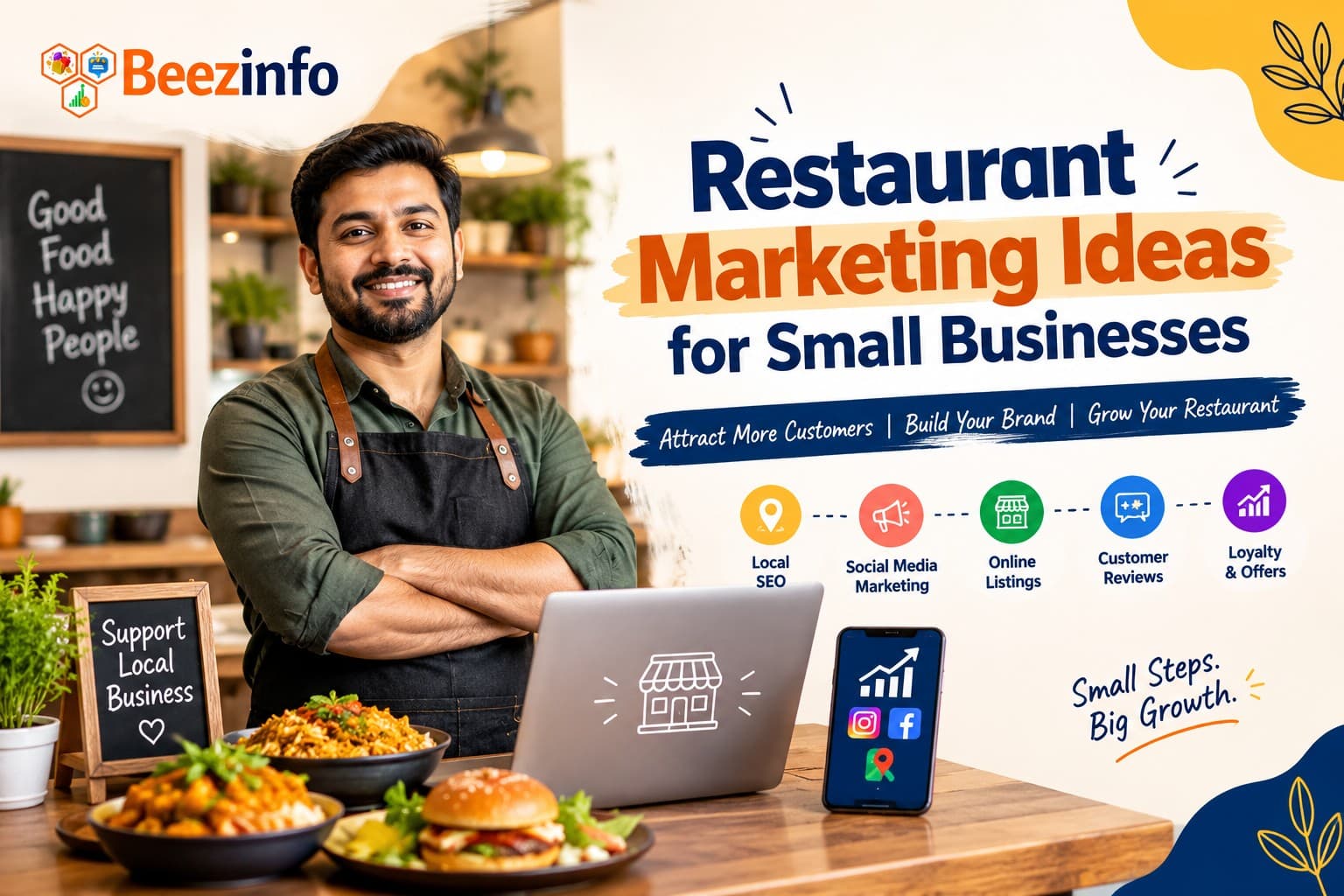
Running a small restaurant is more than just serving great food. To grow your business, you need to bring in new customers, build a loyal following, and make it easy for people to find your restaurant online.
Today, customers often use Google, check online reviews, visit social media, and compare restaurants before deciding where to eat. This makes restaurant marketing essential for small businesses that want to increase their visibility and attract more diners.
The good news is that effective restaurant marketing doesn’t always require a big budget. With the right digital marketing strategies, local promotions, and customer engagement techniques, even a small restaurant can compete with bigger food businesses.
In this guide, we’ll explore practical restaurant marketing ideas for small businesses that can help you reach more customers and grow your restaurant.
Why Is Restaurant Marketing Important for Small Businesses?
Restaurant marketing helps your business reach potential customers, share your unique offerings, and encourage repeat visits.
Key Benefits of Restaurant Marketing
- Increased local visibility: Help nearby customers find your restaurant when searching for places to eat.
- More customer visits: Promote your menu, special offers, and dining experience to attract new visitors.
- Stronger customer relationships: Encourage repeat visits through loyalty programmes and personalised offers.
- Better online reputation: Build trust through positive customer reviews and engaging content.
- Affordable business growth: Use free business listings and organic social media to reach potential customers without heavy advertising costs.
For small restaurants, combining local marketing with a strong online presence can make a meaningful difference.
10 Effective Restaurant Marketing Ideas for Small Businesses
1. Create a Free Online Business Listing
One of the simplest restaurant marketing ideas is to create an online business listing. Many customers search online for restaurants near them, specific cuisines, takeaway options, or places suitable for family dining.
A detailed business listing helps customers find important information about your restaurant, including:
- Restaurant name and location
- Contact number and opening hours
- Cuisine type and menu highlights
- Photos of your food and dining area
- Website and social media links
You can also create a free professional business profile on BeezInfo to help people discover your restaurant online.
Ensure your business information is accurate and consistent across platforms so customers can easily find and contact you.
2. Optimise Your Google Business Profile
A Google Business Profile is an important tool for restaurants that want to attract nearby customers through Google Search and Maps.
How to Optimise Your Google Business Profile
- Add your correct restaurant name, address, and phone number.
- Select the most relevant business category.
- Upload high-quality photos of dishes, interiors, and the dining experience.
- Update opening hours, including holiday hours.
- Add your menu, website, and available ordering options.
- Respond professionally to customer reviews.
- Publish updates about new dishes, offers, and special events.
For example, a family restaurant in Bhubaneswar could create relevant content around searches such as “family restaurant in Bhubaneswar” or “best vegetarian restaurant near me,” provided these descriptions accurately represent the business.
A complete profile can improve your chances of being discovered, although rankings depend on several factors.
3. Promote Your Restaurant on Social Media
Social media platforms such as Instagram and Facebook allow small restaurants to showcase their food and connect directly with customers.
You don’t need an expensive production team. Smartphone photos and short videos can be enough to create engaging content.
Social Media Content Ideas for Restaurants
- Share reels showing food preparation and plating.
- Post your best-selling dishes and menu specials.
- Introduce your chef or restaurant team.
- Share customer testimonials with permission.
- Promote festival menus and seasonal offers.
- Show behind-the-scenes moments from your kitchen.
For example, a restaurant could post a short video of its signature biryani being prepared, followed by a caption inviting customers to visit or place an order.
Use relevant local hashtags and location tags to make your content more useful to nearby audiences.
4. Encourage Customer Reviews and Testimonials
Online reviews help potential customers understand what to expect from your restaurant. Positive feedback can strengthen trust, while thoughtful responses to negative reviews demonstrate that you care about customer satisfaction.
Ways to Get More Genuine Restaurant Reviews
- Display a review QR code at the billing counter.
- Include a polite review request on receipts.
- Send follow-up messages to customers who have opted in for such communications.
- Thank customers for their feedback.
- Handle complaints in a calm and professional manner.
Avoid buying fake reviews or giving rewards in exchange for positive ratings. Instead, focus on delivering a great dining experience and gathering genuine feedback.
5. Offer Attractive Deals and Loyalty Rewards
Special offers can help bring in new customers and encourage repeat visits if planned well.
Restaurant Promotion Ideas
- Lunch combo meals
- Family dining packages
- Weekday discounts
- Birthday meal offers
- Student meal combos
- Loyalty cards for repeat visits
- Seasonal and festival menus
For instance, you could offer a weekday lunch combo at a clearly advertised price or reward regular customers after a certain number of visits.
Before launching a promotion, calculate food costs, operating expenses, and profit margins. The aim is to attract customers without harming the financial stability of the restaurant.
6. Build a Simple Restaurant Website or Digital Menu
A restaurant website provides a central place for customers to learn about your business. It can also help your restaurant appear in relevant search results if optimised properly.
What Should a Restaurant Website Include?
- Restaurant name and location
- Menu items with prices
- Opening hours
- Contact information
- Reservation or ordering details
- Photos of food and the restaurant
- Links to social media accounts
- Customer reviews or testimonials, where appropriate
If you don't have a website, start with a well-maintained digital business profile and other relevant online listings.
A mobile-friendly menu is especially helpful because many people search for restaurants using their smartphones.
7. Use Local SEO to Reach Nearby Customers
Local SEO makes your restaurant more discoverable to people searching for food and dining options in a specific area.
Examples of Local SEO Keywords for Restaurants
- Best restaurant in Cuttack
- South Indian restaurant in Bhubaneswar
- Affordable family restaurant near me
- Chinese takeaway in my area
- Rooftop restaurant in your city
How to Improve Restaurant Local SEO
- Use relevant location-based phrases naturally on your website.
- Create separate pages for different locations if your restaurant has multiple branches.
- Keep your business information accurate across online directories.
- Publish helpful content about your menu, cuisine, and dining experience.
- Collect genuine reviews and keep your online profiles updated.
- Get relevant local links and mentions wherever possible.
Avoid overusing keywords. Useful and accurate information gives a better experience for both customers and search engines.
8. Collaborate With Local Food Creators
Local food bloggers and content creators can help introduce your restaurant to people interested in dining experiences in your area.
Start by finding creators whose audience and content align with your restaurant.
Collaboration Ideas for Restaurants
- Menu tasting sessions
- Restaurant review videos
- New dish launches
- Festival food campaigns
- Short-form food reels
- Local dining guides
You don't always need to work with large influencers. Smaller creators with a relevant local audience may be a better fit for your budget.
Discuss deliverables and costs beforehand, and ensure any sponsored content is clearly labelled.
9. Run Targeted Local Advertising Campaigns
Paid advertising can help restaurants reach potential customers in a specific geographic area.
Google Ads may be useful for reaching people actively looking for restaurants or specific cuisines. Facebook and Instagram ads can showcase food, special offers, events, and new menu items.
Restaurant Advertising Campaign Ideas
- Promote lunch specials in your delivery or service area.
- Advertise a new menu or seasonal offer.
- Reach people near your restaurant.
- Encourage reservations for special occasions.
- Retarget eligible website visitors where appropriate.
Start with a manageable budget and track results such as calls, direction requests, reservations, online orders, and actual visits.
Do not judge a campaign only by likes or impressions. Track actions that support your restaurant's growth.
10. Use WhatsApp and Customer Loyalty Marketing
WhatsApp is a useful way to stay in touch with customers who have agreed to receive updates.
What Can Restaurants Promote on WhatsApp?
- Daily specials
- New menu announcements
- Festival offers
- Reservation confirmations
- Catering services
- Loyalty rewards
Keep messages useful and relevant instead of sending frequent promotional messages.
Always respect customer consent, provide an easy way to opt out, and follow applicable messaging and privacy requirements.
How BeezInfo Can Help Your Restaurant Get Discovered
For small restaurants, building an online presence can feel overwhelming, particularly when time and marketing budgets are limited.
BeezInfo helps businesses create free professional digital business profiles so that potential customers can discover their businesses online.
How to Create Your Free Restaurant Business Profile on BeezInfo
- Visit BeezInfo.
- Create your free business profile.
- Add your restaurant's name and business details.
- Include relevant contact information, services, and other available profile details.
- Keep your listing accurate and up to date.
Creating a business profile gives your restaurant another online presence and helps you share relevant information with potential customers.
Remember that a business listing is just one part of a broader marketing strategy. Combine it with an updated Google Business Profile, genuine customer reviews, local SEO, and engaging social media content for a more complete online presence.
Common Restaurant Marketing Mistakes to Avoid
Even good marketing ideas can lead to poor results if they are not carried out consistently.
Marketing Mistakes Small Restaurants Should Avoid
- Ignoring online reviews: Unanswered customer feedback can create a bad impression.
- Posting inconsistently: An irregular social media presence makes it harder to build a loyal audience.
- Using low-quality food photos: Unclear images may fail to show the appeal of your dishes.
- Offering discounts without considering costs: Promotions that cut into profit margins can hurt your business.
- Ignoring local SEO: Incomplete business information can make your restaurant harder to find.
- Buying fake followers or reviews: Artificial engagement does not necessarily lead to real customers.
- Failing to track results: Without measuring calls, orders, bookings, and visits, it is hard to know which marketing channels are working.
Choose a few practical strategies, measure their effectiveness, and improve your approach over time.
Conclusion
Restaurant marketing does not have to be expensive or complicated. Small businesses can attract more customers by improving their online visibility, keeping business listings accurate, creating engaging social media content, gathering genuine reviews, and offering meaningful promotions.
Start with the basics: optimise your Google Business Profile, build a professional online presence, and make it easy for customers to find and contact your restaurant.
As your business grows, try local SEO, food creator collaborations, paid advertising, and customer loyalty programmes.
Ready to improve your restaurant's online visibility? Create your free business profile on BeezInfo and help more customers discover your business.
Visit BeezInfo to get started.
Frequently Asked Questions (FAQs)
1. What Is the Best Marketing Strategy for a Small Restaurant?
A combination of local SEO, an optimised Google Business Profile, social media marketing, genuine customer reviews, and a complete online business listing is a practical starting point. The best strategy depends on your restaurant's location, audience, budget, and goals.
2. How Can I Promote My Restaurant With Little or No Budget?
Start by creating a free Google Business Profile and a BeezInfo business profile. Share food photos and reels on social media, encourage genuine customer reviews, update your digital menu, and promote your restaurant through existing customer relationships.
3. How Can I Attract More Local Customers to My Restaurant?
Use location-specific website content, keep your online business information accurate, add quality food photos, collect authentic reviews, and promote relevant local offers. Make sure customers can easily find your address, opening hours, and contact details.
4. Does Social Media Marketing Help Small Restaurants?
Yes. Instagram and Facebook can help restaurants showcase dishes, announce special offers, engage with customers, and build brand awareness. Consistent, relevant content is generally more useful than posting frequently without a clear purpose.
5. How Important Are Online Reviews for Restaurants?
Online reviews influence how prospective customers perceive a restaurant. Genuine reviews can build trust and help customers make informed decisions. Responding professionally to both positive and negative feedback also shows that your business values customer experiences.
6. What Is Local SEO for Restaurants?
Local SEO is the process of improving a restaurant's visibility in location-based searches. It includes maintaining accurate business listings, optimising relevant website content, collecting genuine reviews, and ensuring that customers can easily find your location and contact information.
7. How Can BeezInfo Help Small Restaurant Owners?
BeezInfo allows businesses to create free professional digital business profiles. Restaurant owners can use the platform to establish an additional online presence and share relevant business information with potential customers.
8. Should a Small Restaurant Invest in Paid Advertising?
Paid advertising can be useful when a restaurant wants to promote a specific offer, attract nearby customers, or increase bookings and orders. Start with a budget you can afford, target the relevant service area, and measure meaningful results before increasing spending.
9. How Often Should a Restaurant Post on Social Media?
A manageable schedule is more effective than an unrealistic one. Start with a few quality posts or reels each week and share timely updates about menu changes, offers, and events. Adjust your posting frequency according to customer engagement and available resources.
10. How Long Does Restaurant Marketing Take to Show Results?
Some paid campaigns and promotional offers may generate responses quickly, while organic search visibility, brand recognition, and customer loyalty usually take longer to develop. Results depend on competition, location, service quality, consistency, and the marketing channels you use.