Learn how Voice Search Optimization is transforming SEO in 2026. Discover AI SEO, semantic search, topical authority, and practical strategies to improve rankings and visibility.
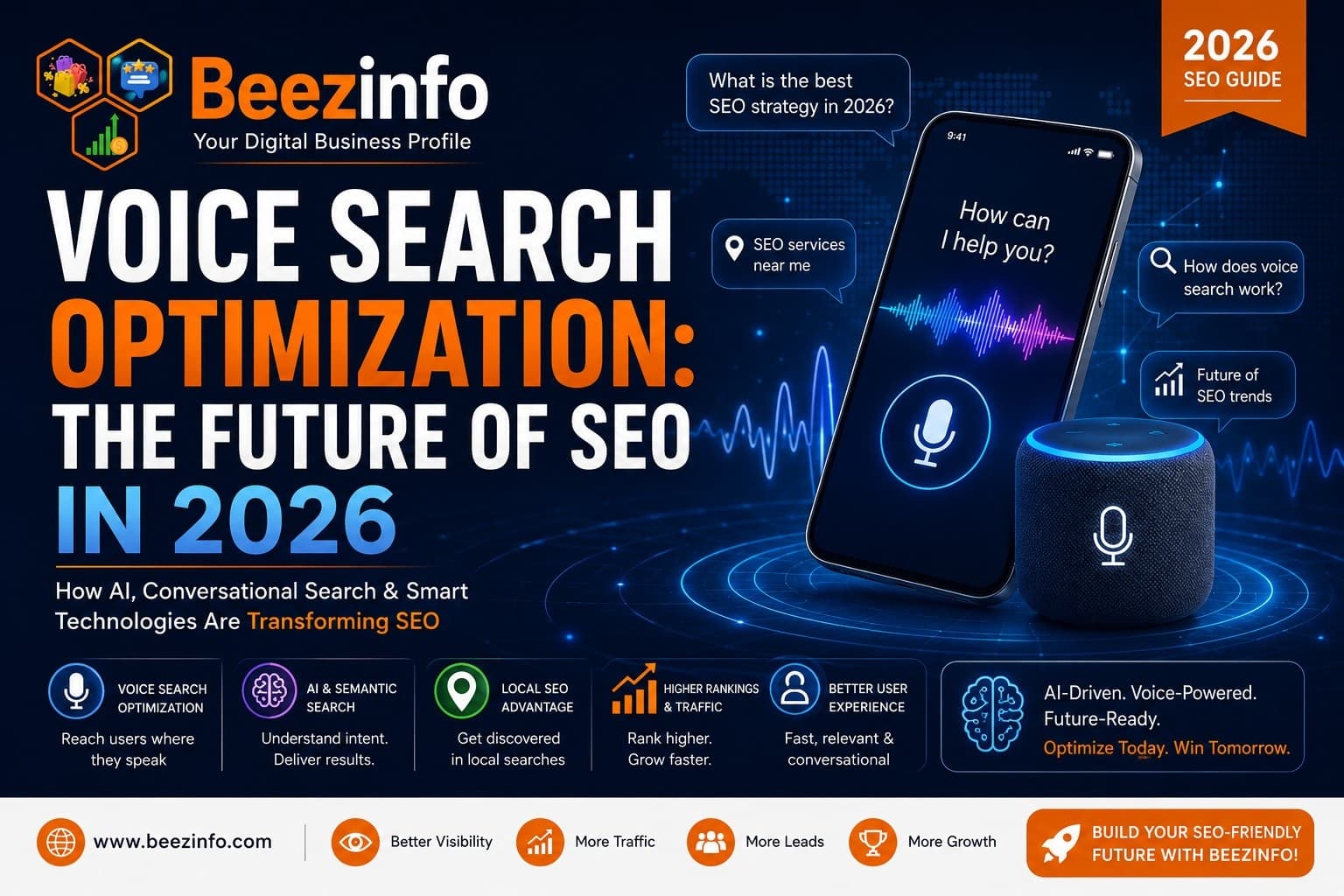
How Businesses Can Rank in AI Search, Voice Assistants & Google's AI Overviews
The way people search online has changed dramatically over the last few years. Instead of typing short keywords like "SEO company", users now ask complete questions such as:
- "Which is the best SEO company near me?"
- "How do I optimize my website for voice search?"
- "What is the future of SEO in 2026?"
This shift is driven by voice assistants, artificial intelligence, mobile devices, and Google's AI-powered search experience.
For businesses, this means traditional keyword optimization is no longer enough. Websites must now understand user intent, answer conversational queries, and provide structured, trustworthy information.
In this guide, we'll explore everything you need to know about Voice Search Optimization, why it matters in 2026, and how businesses can prepare for the future of SEO.
What is Voice Search Optimization?
Voice Search Optimization (VSO) is the process of optimizing your website so it appears in search results when users speak their queries through devices like:
- Google Assistant
- Siri
- Alexa
- Microsoft Copilot
- Gemini AI
- Voice-enabled smart speakers
- AI-powered search engines
Unlike traditional SEO, voice search focuses on natural language, question-based queries, local intent, and direct answers.
For example:
Traditional Search
Best SEO agency Odisha
Voice Search
Which SEO agency in Odisha helps businesses grow organically?
Notice the difference?
Voice searches are longer, conversational, and intent-driven.
Why Voice Search Matters in 2026
Search behavior continues to evolve as AI becomes deeply integrated into everyday technology.
Some notable trends include:
- Millions of users perform voice searches daily using smartphones and smart speakers.
- Mobile users increasingly prefer speaking over typing for local searches.
- AI assistants summarize answers instead of displaying only a list of links.
- Google AI Overviews prioritize websites that provide clear, structured, and authoritative answers.
Businesses that optimize for conversational search are better positioned to capture this growing audience and increase qualified organic traffic.
How AI Has Changed SEO
Modern SEO is no longer only about keywords.
Google now evaluates:
- Search intent
- Context
- Topic relationships
- Entity understanding
- Content quality
- Experience and expertise
- User satisfaction
Instead of asking:
"What keyword should I rank for?"
SEO professionals now ask:
"How completely does my content answer the user's problem?"
This is semantic SEO.
Voice Search vs Traditional SEO
| Traditional SEOVoice Search SEO | |
| Short keywords | Conversational questions |
| Desktop-focused | Mobile-first |
| Keyword density | User intent |
| Individual pages | Topic clusters |
| Rankings | Direct answers |
| Click-focused | Answer-focused |
The future belongs to websites that answer questions naturally.
Build Topical Authority Instead of Individual Articles
Google rewards websites that demonstrate expertise across an entire subject rather than publishing isolated posts.
For example, if your niche is SEO, create a comprehensive content ecosystem around:
- Technical SEO
- Local SEO
- Voice Search Optimization
- AI SEO
- Semantic SEO
- Keyword Research
- Link Building
- Core Web Vitals
- Google Search Console
- Content Marketing
- Schema Markup
When these pages are internally linked, search engines recognize your website as a trusted source of expertise.
This strengthens topical authority and improves rankings across related queries.
Entity SEO: The Foundation of Modern Search
Google understands entities rather than just keywords.
An entity is a uniquely identifiable concept, such as:
- Google Search Console
- Google Business Profile
- Schema.org
- Core Web Vitals
- SEO
- Artificial Intelligence
Instead of repeatedly using one keyword, naturally include related concepts throughout your content.
For example, an article about Voice Search Optimization should also reference:
- Natural Language Processing (NLP)
- Conversational Search
- Featured Snippets
- AI Overviews
- Structured Data
- Mobile SEO
- Local SEO
- Schema Markup
- Search Intent
- Semantic Search
This helps search engines better understand the topic and improves semantic relevance.
Optimize for Google's AI Overviews
Google's AI-generated search summaries are changing how users discover information.
To increase your chances of being featured:
Answer Questions Immediately
Provide a concise answer within the first few sentences before expanding on the topic.
Use Clear Headings
Organize content with descriptive H2 and H3 headings that mirror user questions.
Add FAQ Sections
Frequently asked questions align well with conversational searches and AI-generated summaries.
Write in Simple Language
Avoid unnecessary jargon. AI systems favor content that is easy to interpret and summarize.
Include Real Examples
Practical examples improve clarity and build trust.
Voice Search Optimization Framework
Follow this simple framework when creating content.
Step 1: Research Conversational Keywords
Instead of targeting:
SEO Agency
Target:
- Which SEO agency is best for small businesses?
- How much does SEO cost?
- Why is SEO important in 2026?
Question-based queries closely match how users speak.
Step 2: Create Topic Clusters
Build a pillar page supported by related articles.
Example:
Pillar Page:
Complete SEO Guide
Supporting Articles:
- Voice Search Optimization
- Local SEO
- Technical SEO
- On-Page SEO
- AI SEO
- Link Building
- SEO Audit
- Keyword Research
This improves crawlability, strengthens internal linking, and reinforces topical authority.
Step 3: Add Structured Data
Schema Markup helps search engines understand your content more accurately.
Useful schema types include:
- FAQ Schema
- Organization Schema
- Article Schema
- Local Business Schema
- Breadcrumb Schema
Structured data can improve visibility through rich results and AI-powered search features.
Step 4: Improve Page Experience
Voice search users expect fast answers.
Focus on:
- Fast loading speed
- Mobile responsiveness
- HTTPS security
- Clear navigation
- Readable typography
- Accessible design
A smooth user experience supports both rankings and conversions.
Step 5: Strengthen Internal Linking
Connect related articles using descriptive anchor text.
Example:
An article about Voice Search Optimization should naturally link to:
- Technical SEO Guide
- Local SEO Checklist
- Content Marketing Strategy
- AI SEO Best Practices
Internal links help search engines understand relationships between topics and keep users engaged longer.
Real Example
Imagine a local digital marketing agency publishes only one page titled:
"SEO Services"
A competitor creates:
- SEO Services
- Voice Search Optimization
- AI SEO Guide
- Local SEO Tips
- Technical SEO Checklist
- Schema Markup Tutorial
- Google Business Profile Guide
- Core Web Vitals Explained
Which website appears more authoritative?
The second website covers the topic comprehensively, making it more likely to earn visibility across a wider range of related searches.
Common Voice Search SEO Mistakes
Avoid these common issues:
- Writing only for keywords instead of users
- Ignoring question-based queries
- Missing structured data
- Poor mobile experience
- Slow website speed
- Weak internal linking
- Thin or duplicate content
- Publishing isolated blogs without topic clusters
Correcting these issues can improve both search visibility and user engagement.
Final Thoughts
Voice Search Optimization is no longer a trend—it's becoming a core part of modern SEO. As AI assistants, conversational search, and Google AI Overviews reshape how users find information, businesses need to move beyond traditional keyword strategies.
Success in 2026 depends on creating comprehensive, intent-driven content, building topical authority, implementing structured data, and delivering fast, user-friendly experiences. By aligning your SEO strategy with how people naturally ask questions, your website can earn greater visibility, stronger credibility, and sustainable organic growth.
Businesses that adapt early will be better positioned to capture the next generation of search traffic. With the right strategy, Voice Search Optimization can become a powerful competitive advantage—and Beezinfo is ready to help you build an SEO foundation that is prepared for the future.
Frequently Asked Questions
Is voice search replacing traditional search?
No. Voice search complements traditional search. Users still type many queries, but conversational and voice-based searches continue to grow, especially on mobile devices and AI assistants.
Does voice search affect local SEO?
Yes. Many voice searches include local intent, such as "near me" or city-specific queries. Optimizing your Google Business Profile, local landing pages, and location-specific content can improve visibility.
What is semantic SEO?
Semantic SEO focuses on covering a topic comprehensively using related concepts, entities, and user intent rather than repeating a single keyword.
What are AI Overviews?
AI Overviews are AI-generated summaries shown in Google Search for many informational queries. They highlight concise, authoritative content that directly answers user questions.
How can Beezinfo help with voice search optimization?
Beezinfo provides modern SEO strategies including semantic content creation, technical optimization, local SEO, structured data implementation, AI-ready content, and topical authority development to help businesses improve their visibility in evolving search experiences.